Don’t warp the rotor
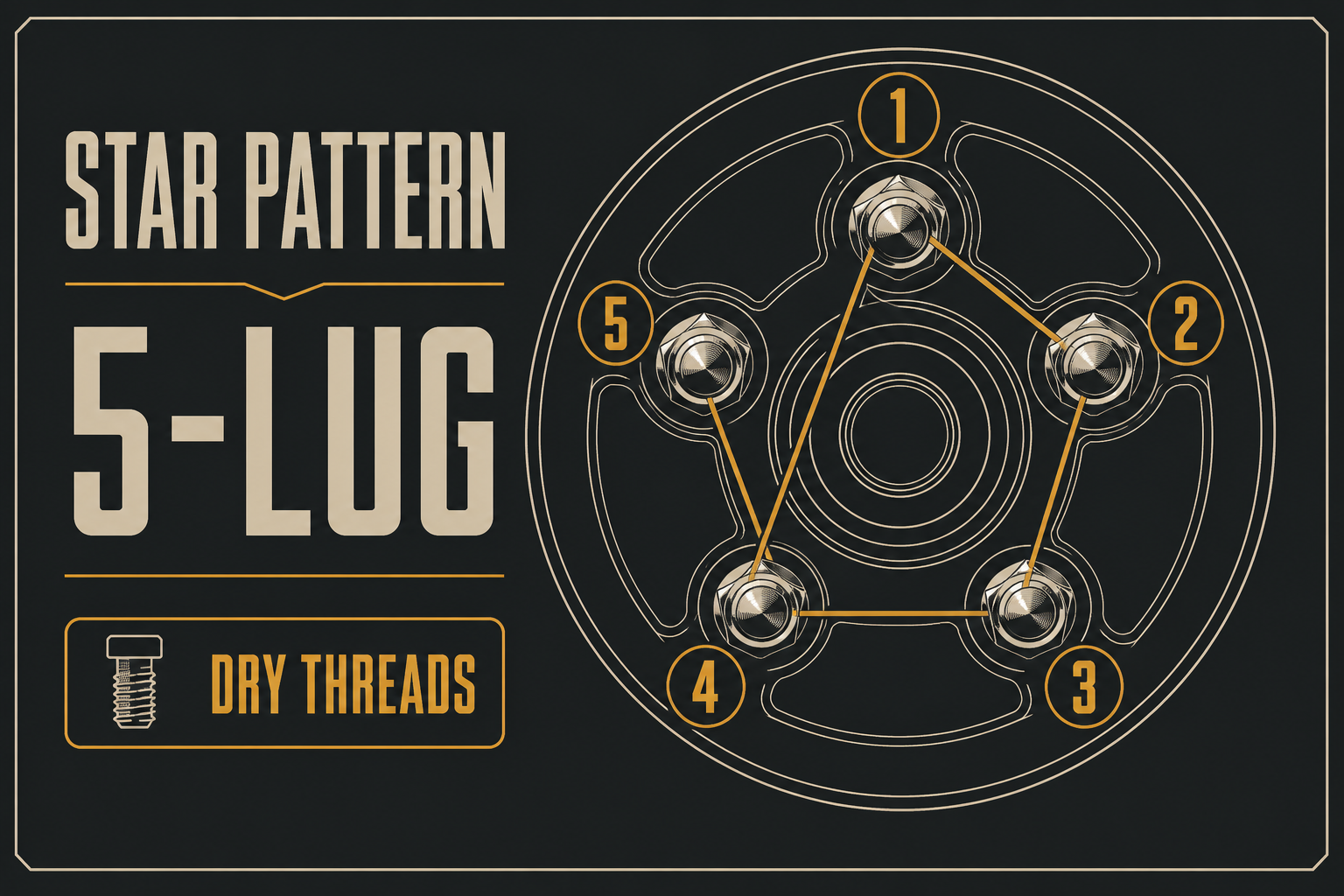
Muscle cars sit on fat tires and cheap aftermarket wheels more than anything else in the bay. The first place a driveway install goes wrong is the last thirty seconds: someone leans on an impact, the rotor later runs out, and they blame the cheap hat instead of the clamp load.
Factory torque is a clamp-load number, not a suggestion. The owner’s manual — or the service manual if the OM is silent — is the only number that matters. Tire-shop posters and internet “120 all around” charts are averages. We already ran factory books against WhatSizeBolt and Ascot on 1996–2026 North American cars. When those three agree, use it. When they fight, we show the fight. We do not average them.
Dry threads
Clean the seat on the wheel and the flange. No paint blobs, no rust flakes, no leftover anti-seize from the last guy. The factory number assumes clean, dry threads unless that exact book says otherwise. Anti-seize changes friction. Changed friction changes clamp load at the same wrench reading. Do not invent a twenty-percent reduction and call it science. If you already slathered it, clean it off and start over.
Star pattern, never around the circle
- 4-lug: opposite. An X.
- 5-lug: skip one each time. 1–3–5–2–4.
- 6-lug: star, or two triangles.
- 8-lug: criss-cross, opposite then opposite.
Snug by hand in that order, then torque in at least two passes: half spec, then full spec. A click wrench you actually had calibrated. Not the twenty-year-old one that clicks at whatever.
Do not final-torque with an impact. Impacts take wheels off and run nuts down to seat. Then you stop. The final number is a torque wrench.
Re-torque
After you drive it 80–100 km (50–60 miles), re-torque cold. New wheels, new rotors, and aftermarket two-piece wheels settle. Skip that and you get a loose nut or a warped hat.
Wheels and studs
Hub-centric rings matter on aftermarket wheels. Lug-centric cheap wheels will walk and heat-cycle a rotor even if the torque is perfect.
Studs: 7/16, 1/2, 12 mm, 14 mm are not interchangeable just because a nut threads on. Stretch a 12 mm stud to a 14 mm number and you bought new studs.
If the hat is already cooked, a new rotor on the same warped habit will look the same in a week. Fix the clamp load first.