Time a small-block without guessing
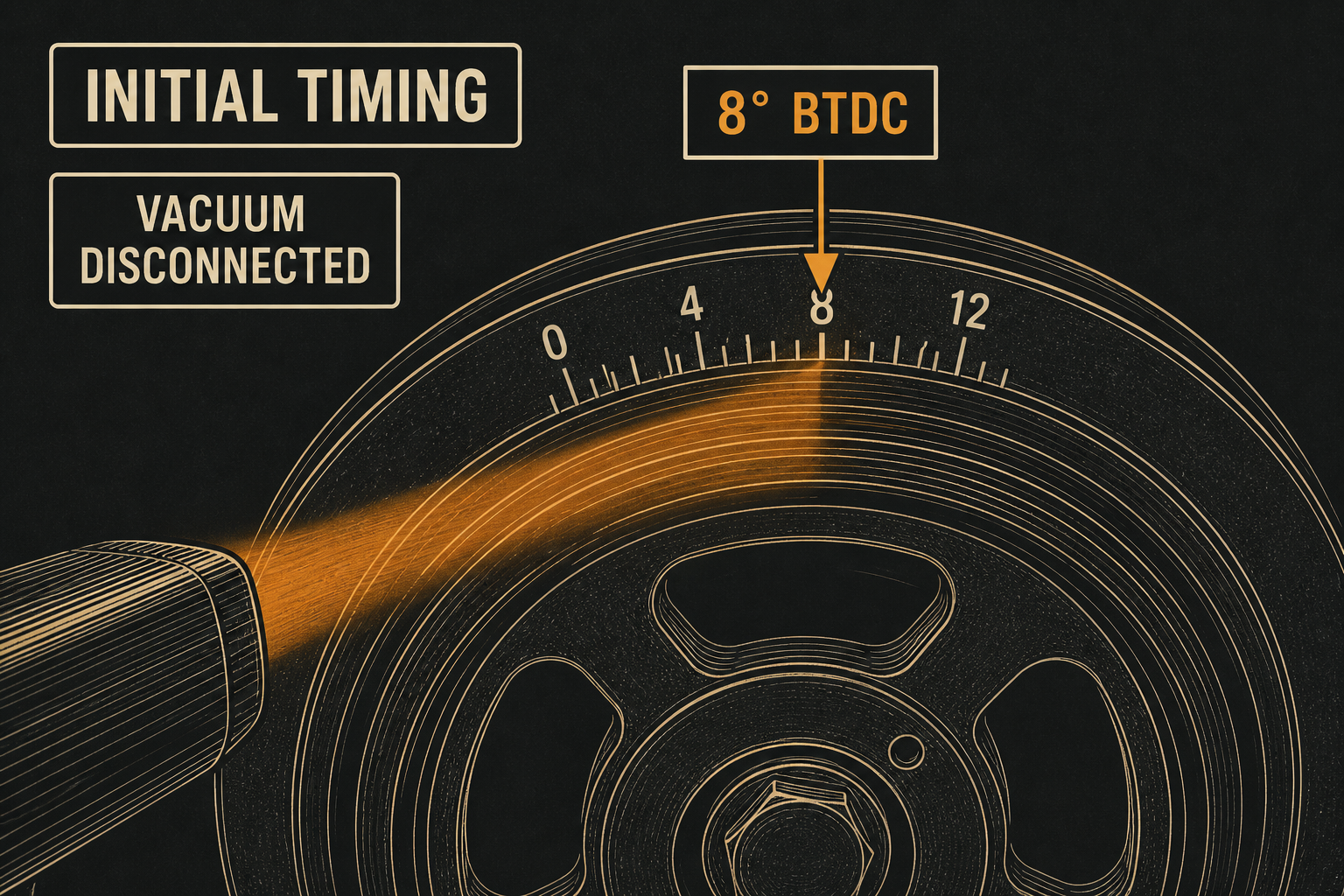
You time a carbureted small-block Chevy to the underhood emissions decal, not to a magazine’s 36 degrees. The decal is initial timing, at idle, vacuum advance disconnected and plugged.
What you need: a timing light, a balancer that still has marks, a pointer that has not been bent, and a vacuum plug. If the outer ring on the balancer has spun, your marks are a lie. Replace the balancer. Do not paint a new zero and call it calibrated.
Set initial
- Warm the engine.
- Pull the vacuum hose at the distributor can. Plug the hose so you are not leaking vacuum into the base plate.
- Set idle to what the decal says — or a clean curb idle if the idle screw has been played with. Timing and idle chase each other.
- Flash the balancer. Read initial. Factory numbers on 1960s–80s small-blocks often sit in a 4–12° BTDC window. The number on your decal is the one that matters. The 8° in the diagram is a mark on a pulley, not a spec for every 350 ever built.
- Loosen the hold-down. On most Delco distributors, rotating the housing opposite rotor rotation advances timing. Tighten. Recheck.
Then check total mechanical
Leave vacuum disconnected. Rev to the point the mechanical weights are all the way out — often 3,000–3,500 rpm on a stock curve, higher if someone stuffed heavy springs in the advance. Street small-blocks commonly end up around 34–36° total mechanical. That is a tuning convention, not a factory number for every year. If the factory published a total, use that. If they only published initial, set initial to the decal and make sure total is not 40-plus from a worn bushing and weak springs.
HEI does not replace the curve
Electronic ignition still uses initial plus mechanical plus vacuum. The module fires the coil. It does not invent a better advance curve. Aftermarket “lock it out and run a box” is a race setup. Street cars keep the curve.
Canadian winter: a fat initial that idles nice in July will load the starter in January. Set it to the book, then tune total. If you need more cruise advance, that is the vacuum can, not another six degrees of initial.
When it still pings
Fuel, heat, and a lean idle mixture will ping a correctly timed engine. So will a loose flex-fan hitting the clutch, a plugged radiator, and a too-tight belt on a water pump that already weeps. Timing is one lever. Do not chase detonation with the distributor until the cooling system and the mixture are honest.